Master Java file automation to transform tedious file management tasks into efficient, automated processes. Discover powerful techniques for copying, moving, and organizing files effortlessly.
As I sit before my computer, watching the cursor blink rhythmically against the blank screen, I realize how much of my digital life consists of repetitive file tasks. The constant copying, moving, deleting—these mundane operations that consume precious creative energy. But what if I could teach my machine to handle these chores for me? What if I could transform monotony into automation?
The Dance of Directories
I begin by creating a simple Java console application, my digital apprentice. The first step is to explore what lies within my directories. With the File class, I can peer into folders and discover their contents:
File directory = new File("NewDirectory");

File[] listOfFiles = directory.listFiles();

for (File file : listOfFiles) {

    System.out.println(file);

}
Each file reveals itself like a character in a story, waiting to be understood and organized.
The Art of Duplication
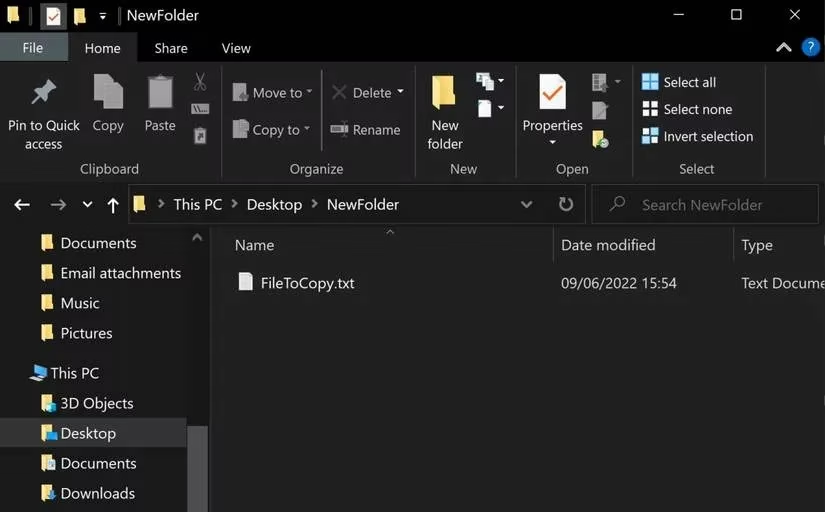
Copying files becomes a graceful ballet of streams and bytes. I watch as my program effortlessly replicates documents:
String copySource = "FileToCopy.txt";

String copyDestination = "NewFolder/FileToCopy.txt";

try {

    Files.copy(Paths.get(copySource), Paths.get(copyDestination));

} catch(Exception e) {

    System.out.println("Could not copy the file");

}
The Migration of Folders
Moving directories feels like guiding a flock of birds to a new nesting ground. The Files.move() method becomes my gentle shepherd:
File moveSource = new File("DirectoryToMove");

File moveDestination = new File("NewDirectory/DirectoryToMove");

try {

    Files.move(moveSource.toPath(), moveDestination.toPath());

    System.out.println("Directory moved successfully.");

} catch (IOException ex) {

    ex.printStackTrace();

}
The Liberation of Space
Deleting files is the digital equivalent of autumn leaves falling—making space for new growth:
File fileToDelete = new File("FileToDelete.txt");

if (fileToDelete.delete()) {

    System.out.println("File successfully deleted.");

} else {

    System.out.println("Unable to delete the file.");

}
The Gathering of Archives
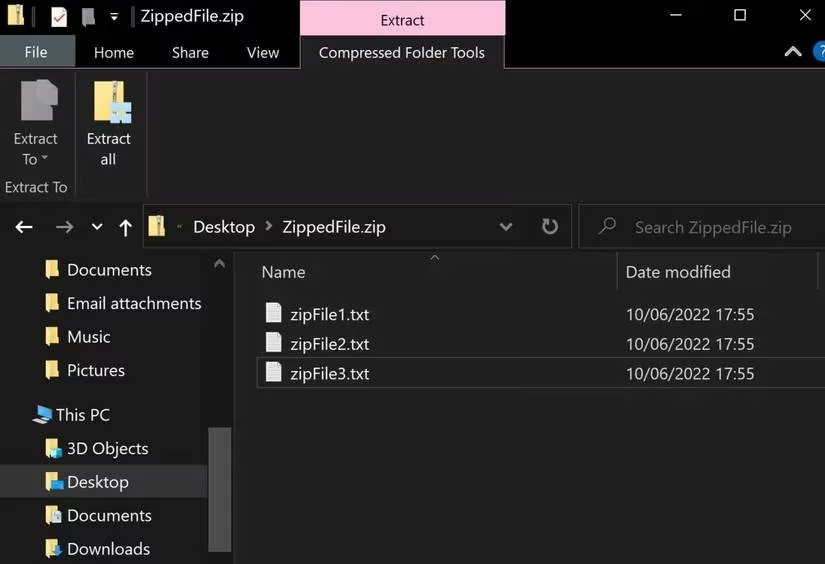
Zipping files transforms scattered documents into organized collections, like gathering wildflowers into a beautiful bouquet:
File zipFile = new File("ZippedFile.zip");

ZipEntry[] zipEntries = new ZipEntry[] {

    new ZipEntry("zipFile1.txt"),

    new ZipEntry("zipFile2.txt"),

    new ZipEntry("zipFile3.txt")

};

ZipOutputStream out = new ZipOutputStream(new FileOutputStream(zipFile));

for (ZipEntry zipEntry : zipEntries) {

    out.putNextEntry(zipEntry);

    StringBuilder sb = new StringBuilder();

    sb.append("Content Inside Text File");

    byte[] data = sb.toString().getBytes();

    out.write(data, 0, data.length);

    out.closeEntry();

}

out.close();
The Rhythm of Automation
What I've discovered through this journey is that automation isn't about removing the human touch—it's about elevating it. By handling the repetitive tasks, I free myself to focus on what truly matters: creation, innovation, and the beautiful complexity of problem-solving.
Each Java method I've implemented represents a step toward digital harmony:
-
📁 Exploring directories with listFiles()
-
📋 Copying documents with Files.copy()
-
🚚 Moving folders with Files.move()
-
🗑️ Deleting clutter with delete()
-
📦 Archiving collections with ZipOutputStream
The beauty of this approach lies in its scalability. What begins as simple file management can grow into complex workflows that handle thousands of files across multiple directories. The same principles that help me organize my personal documents could power enterprise-level data processing systems.
The Future of File Management
As I look toward 2025 and beyond, I see automation becoming increasingly sophisticated. Machine learning could help predict which files need organization, while natural language processing might allow us to manage files through conversational commands. But the foundation will always be these basic file operations—the building blocks of digital organization.
My journey with Java file automation has taught me that the most powerful tools are often the simplest. By mastering these fundamental operations, I've not only saved time but also gained a deeper understanding of how computers interact with data. Each line of code represents a conversation between human intention and machine execution—a dialogue that transforms chaos into order, complexity into simplicity.
In the end, automation isn't about replacing human effort—it's about augmenting human capability. It's the digital equivalent of having a helpful assistant who handles the mundane tasks, leaving you free to pursue your creative passions. And that, I believe, is the true poetry of programming.