Coolendar and 1Calendar revolutionized productivity tools by uniting calendars and to-do lists with seamless, minimalist design.
A weary productivity geek once bounced from Remember the Milk to Springpad, Toodledo, Reqall, and finally Google Calendar–plus–Tasks, only to discover that none of them truly played nice together. From 2026, watching that decade‑old saga unfold feels like spying on a younger sibling trying to fit square pegs into round holes. The dream was always the same: a single pane where calendar events and to‑do items danced in harmony, preferably with an iPhone app that didn't require switching between five different tabs. Two fledgling services—Coolendar and 1Calendar—promised exactly that, before they faded into the internet’s vast attic of forgotten productivity tools.
Back then, Google Calendar’s sync behaved like a sleepy tortoise—updates crawled in once a day, unless you were lucky enough to use a native client. The experimenter soon realized that a clever service named Coolendar was doing something radical. It didn’t bother with a classic month grid. Instead, it swallowed plain‑English entries: type a date or time first, then the event, and the machine sorted everything into logical buckets—today, tomorrow, this week, or a custom undated list. Users could even drag undated tasks into a personal priority order, something Google Tasks only half‑heartedly allowed.
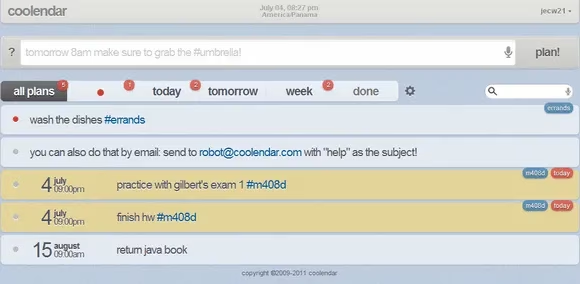
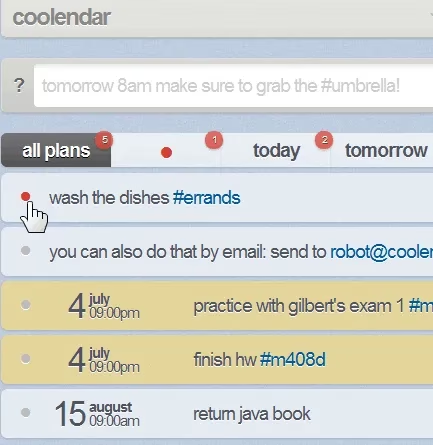
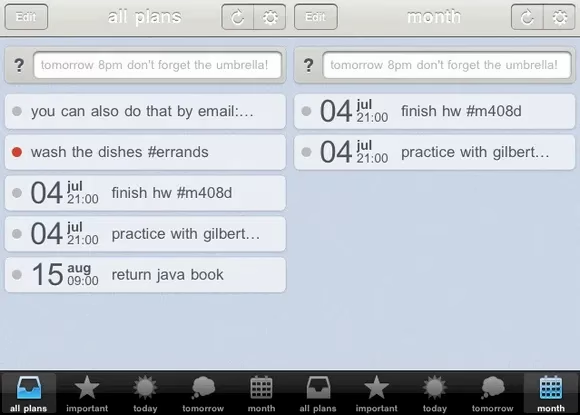
What made Coolendar feel like a small rebellion was its outright rejection of event duration and recurrence. The team believed those were “poison concepts”—instead, the app would nudge you via SMS or Twitter, and you’d decide on the spot whether to reschedule. While controversial, this stripped‑down philosophy meant the mobile interface (there was an official iPhone app, and an Android version that was perpetually “nearing completion”) felt surprisingly coherent. Users could view all commitments without hopping between a calendar app and a to‑do list. Even the sign‑up process was friction‑free: just log in with a Google account. From a 2026 vantage point, that “nearing completion” Android app remains the stuff of legend—the promised apk never materialized, but the memory of its simplicity lives on in modern minimalist planners.
Then came 1Calendar, which looked like Google Calendar’s more social cousin. It kept the familiar weekly grid in the center, a multi‑colored calendar sidebar on the left, and a task pane on the right. What set it apart was its ability to suck in Facebook events and university timetables—a godsend for students juggling lectures and parties. The color‑coded tasks lived right next to appointments, so one glance revealed whether an assignment deadline was sharing screen real estate with a birthday party.
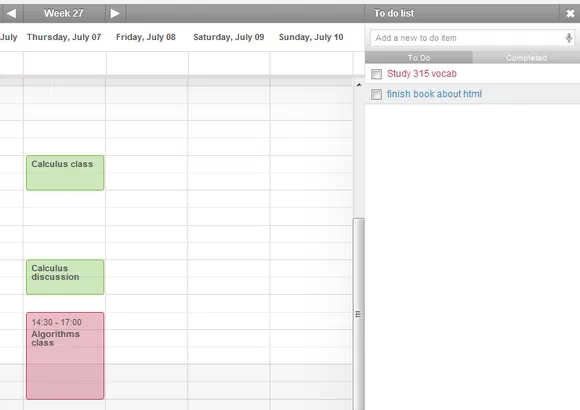
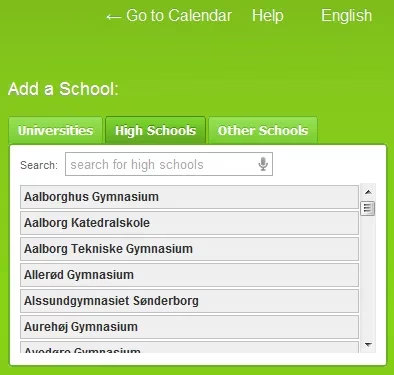
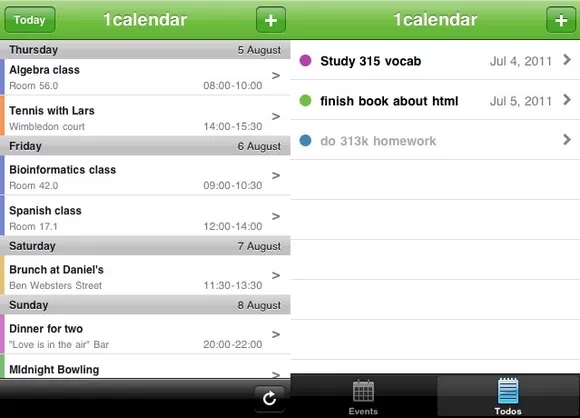
Despite being in its infancy, 1Calendar’s iPhone app offered an event list view that many GTD junkies craved. No more bouncing between the native Calendar and some third‑party to‑do list. It was, for a moment, a tidy bridge between what needed doing and what time was already claimed. The university timetable import feature was delightfully quirky—it worked for a few schools, and the developers seemed eager to add more, but the database never grew to cover the entire globe.
When placed side by side, the two upstarts revealed a fascinating split in design philosophy:
| Feature | Coolendar | 1Calendar |
|---|---|---|
| Main view | Sorted task list with date tabs | Weekly matrix grid + task sidebar |
| Date handling | Plain‑English natural input | Standard calendar pickers |
| Recurrence & duration | Rejected—reminders prompt reschedule | Supported, but basic |
| External sync | Google account only | Facebook events, school timetables |
| Mobile app | iPhone (Android promised, never shipped) | iPhone + early Android event list |
| Priority system | Red‑circle manual sorting | Color‑coded task lists |
Looking back from 2026, both apps have vanished from the mainstream, swallowed by either acquisition or abandonment. Yet their fingerprints are everywhere: natural language task entry is now a staple in tools like Todoist and Fantastical; the idea of viewing tasks alongside calendar events has become a default expectation; and rejecting event duration as a necessary evil? That inspired the rise of daily “focus blocks” that many modern planners champion. The experimenter who originally stumbled upon Coolendar and 1Calendar might have moved on to more mature ecosystems, but those early, imperfect solutions proved that the calendar–task marriage was worth fighting for.
Ultimately, the story of Coolendar and 1Calendar is less about two apps and more about a persistent user dream—one that the tech giants have since patched up, albeit never quite as lovingly as these tiny side projects once attempted. In the great productivity graveyard of the internet, they remain two tombstones that still make a few old‑school enthusiasts smile.