Gmail optimization and browser extensions empower users with enhanced productivity, efficiency, and personalized digital communication.
As we move through 2026, Gmail remains a cornerstone of digital communication, and optimizing its use is more crucial than ever. While the core service continues to evolve, a vast ecosystem of tools, extensions, and techniques exists to tailor the experience to individual needs, boosting efficiency and organization. From browser enhancements to desktop integrations and powerful automation guides, users have a wealth of resources at their fingertips to transform their inbox into a highly productive command center.

🔧 Browser Extensions & Add-Ons
Modern browsers, with their extensive extension libraries, offer some of the most direct ways to supercharge Gmail. These tools integrate seamlessly, adding functionality without leaving the web interface.
-
Gmail Manager remains a classic for power users juggling multiple accounts. It provides new mail notifications and a quick view of unread messages directly from the browser's status bar, eliminating the need to keep Gmail tabs perpetually open.
-
Better Gmail has evolved, consolidating features from numerous user scripts into a single, robust add-on. It can integrate feeds, apply custom skins, and enforce fixed-width fonts for better readability.
-
For customization enthusiasts, GmailSkinz-style addons allow deep personalization. Users can change inbox colors, insert images from cloud albums, add custom modules, and reconfigure the navigation layout to suit their workflow.
-
DragDropUpload exemplifies simple yet powerful utility. This extension allows users to attach files to emails by simply dragging them onto the compose window, a significant time-saver.
-
Privacy-focused tools like CustomizeGoogle help streamline the interface by removing ads and enforcing secure HTTPS connections, while FireGPG-like utilities can add encryption options for sensitive communications.
🤖 Automation & Scripting
For those willing to delve deeper, user scripts provide granular control over Gmail's behavior, automating tasks and modifying the interface beyond standard settings.
-
Clean Interface Scripts: Scripts like Gmail Super Clean strip away distracting elements, offering a minimalist, focused inbox view. Others can hide specific counters or page elements to reduce visual clutter.
-
Integration Boosters: Deep integration with other Google services is a common theme. Scripts can embed a Google Calendar agenda or Google Reader folders directly within the Gmail sidebar, creating a unified dashboard.
-
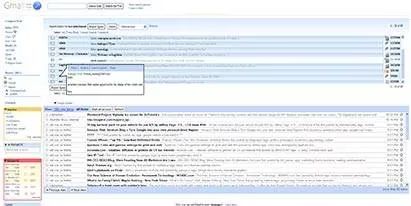
Enhanced Functionality: Advanced scripts add features Gmail might lack natively. Conversation Preview lets users peek at email content from the main list. Saved Searches create smart folders for persistent filters. Folders4Gmail-style scripts enable nested label structures for superior organization.
-
Security & Reminders: Scripts can also enforce security by forcing all connections over HTTPS (SSLGoogle) or act as a smart assistant, like an Attachment Reminder that prompts you if you've mentioned an attachment but forgotten to include the file.
💻 Desktop Programs & Web Applications
Beyond the browser, standalone applications bridge the gap between Gmail's web interface and the native desktop experience, offering unique utilities.
| Platform | Tool | Primary Function |
|---|---|---|
| Windows | GmailDrive-style Apps | Create a virtual drive using Gmail storage. |
| macOS | Mailplane-style Clients | Native-feeling mail client built on Gmail's engine. |
| Cross-Platform | Gmail Loader | Migrate old email archives into Gmail. |
| Web-Based | Unbl0ck-style Proxies | Access Gmail from restricted networks. |
| Mobile | Gmail Mobile Apps | Official and third-party apps for on-the-go access. |
-
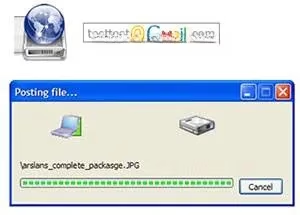
Storage utilities like GmailDrive (for Windows) or gDisk (for macOS) famously repurposed Gmail's generous storage as a mountable network drive, though their long-term viability depends on Google's API policies.
-
Dedicated desktop clients, such as MailPlane for macOS, aim to combine Gmail's power with a native application's interface and system integration.
-
Migration tools like Gmail Loader are invaluable for consolidating decades of email from various accounts into Gmail's searchable archive.
-
Web applications also play a role, from services that generate image-based email addresses to reduce spam, to proxies designed to bypass network blocks at workplaces or schools.
📢 Notifiers & Alerts
Staying on top of incoming mail without constantly refreshing the browser is key. System-level notifiers provide discrete alerts.
-
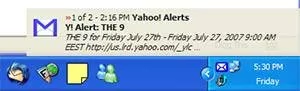
Windows: Official Gmail Notifier and third-party alternatives like GTray offer tray icon alerts.
-
macOS: Notifiers can integrate with system-level notification centers like Growl or its successors for rich alerts.
-
Linux: Tools like KCheckGmail provide native integration for KDE and other desktop environments.
-
Browser-Based: Extensions like Gmail Notifier for Firefox provide alerts within the browser itself.
📚 Comprehensive How-To Guides
The true power of Gmail is unlocked through knowledge. A repository of how-to guides empowers users to solve complex problems and implement advanced workflows.
-
Account Management & Migration: Guides cover importing contacts from other services, backing up emails using methods like Google Groups or Fetchmail, and even the sobering process of accessing a deceased person's account.
-
Integration & Sync: Step-by-step instructions exist for setting Gmail as the default mail client on systems like Ubuntu, syncing Google Calendar and contacts to the desktop, and creating calendar events directly from emails.
-
Advanced Configuration: Users can learn to configure Gmail on standalone clients like Mozilla Thunderbird using IMAP for robust offline access and tagging.
-
Security & Productivity: Guides detail using encryption tools like FireGPG, working with attachments professionally (including sending typically blocked file types), and building advanced filters for automatic email sorting.
-
Troubleshooting: Tips address common issues, such as managing a nearly full inbox or diagnosing the source of spam by identifying compromised email addresses.
⌨️ Shortcuts & Efficiency Tips
Mastering keyboard shortcuts is the final frontier for Gmail power users. They transform navigation from a point-and-click exercise into a fluid, rapid-fire process.
-
Essential Shortcuts:
Cto compose,Rto reply,Eto archive,#to delete, andJ/Kto move between conversations. -
Navigation Shortcuts:
GthenIto go to Inbox,GthenSto go to Starred,GthenAto go to All Mail. -
Action Shortcuts:
Xto select a conversation,+or-to add/remove a star,Lto open the label menu,Vto move to a folder.

Pro Tips for 2026:
-
Leverage AI-Powered Features: Utilize Gmail's built-in smart compose, reply suggestions, and automated email categorization to save time.
-
Create Persistent Searches: Use advanced search operators to create virtual folders for emails from specific senders, with certain keywords, or within date ranges.
-
Automate with Filters & Labels: The combination of powerful filters and a logical label system remains the most effective way to maintain inbox zero and ensure critical emails are never missed.
In conclusion, Gmail in 2026 is far more than a simple email client. It is a platform that, when augmented with the right tools, scripts, and knowledge, becomes a personalized productivity hub. By exploring browser extensions, automation scripts, desktop integrations, and the wealth of available guides, users can craft an email experience that is not only efficient but also uniquely suited to their professional and personal needs. The ongoing evolution of both Gmail and its ecosystem ensures that there are always new ways to optimize and enhance this essential digital tool.