jDownloader, a cross-platform download manager, automates captchas and wait times, making file-sharing downloads seamless and free.
By 2026, the digital torrent of everyday life had only grown stronger. Everything Alex needed for her graduate research—obscure papers, datasets, and even the occasional niche documentary—existed as bits scattered across file-sharing websites. These platforms, born from the original promise of personal storage and legal exchange, had become vast, unindexed libraries. Navigating them, however, still felt like running a gauntlet. No native search, endless countdowns, and captchas that looked like they were designed by a misanthropic AI remained the standard fare for anyone unwilling to pay the premium fees. Alex knew she could bypass some of that pain. A friend had mentioned an old cross‑platform tool called jDownloader, an application that had been eliminating download hoops since the days when RapidShare ruled the scene. She decided to give it a try on her ageing but perfectly functional laptop.

The world itself had changed rapidly, but the core annoyance hadn't. RapidShare itself was long gone, replaced by a constellation of similar hosts, yet the free tier dance remained the same: a sixty‑second wait, a grid of traffic lights to click, and the absurd slowdowns that made downloading a single PDF feel like pulling teeth. Alex recalled using a Firefox add‑on called SkipScreen back in her undergrad years. It had been brilliant for skipping the interstitial countdown pages, but she no longer relied on Firefox, and she craved something more autonomous. That’s when her friend insisted, “Just install jDownloader. It’s Java‑based, so it works on everything, and it’s free. You copy a link, and it does the rest.”

Though jDownloader had been around since the early 2010s, regular updates had kept it relevant. After a quick installation on her macOS, Alex confronted an interface that, to her mild surprise, still carried a no‑nonsense, almost Windows‑like aura. Appearances didn’t matter; functionality did. She copied a file link from a forum that pointed to a service she’d never heard of. Instantly, the LinkGrabber tab sprang to life. A green checkmark appeared beside the file name, its status column reading “online.” The entire process felt oddly satisfying, as if the software had snatched a piece of chaos and turned it orderly.
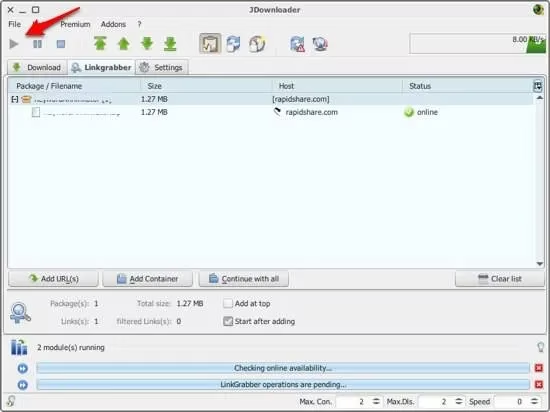
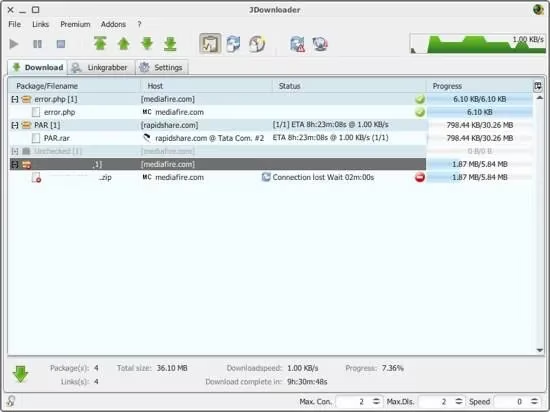
She selected the entry and clicked the start button. The file migrated to the “Download” tab, and the progress bar began to creep forward. In the background, jDownloader had silently handled the captcha recognition, waited out the mandatory delay, and triggered the download as if it were a paid premium user. Alex smiled at the quiet efficiency. But she noticed a quirk: if she was already downloading something from one file host, starting a second download from the same provider would always fail. The tool enforced the host’s restrictions to avoid being flagged. Another discovery was that interrupted downloads were a mixed bag—some could be resumed with a simple click, while others demanded a fresh start. She made a mental note to keep her Wi‑Fi stable and close her video conference calls during large transfers.
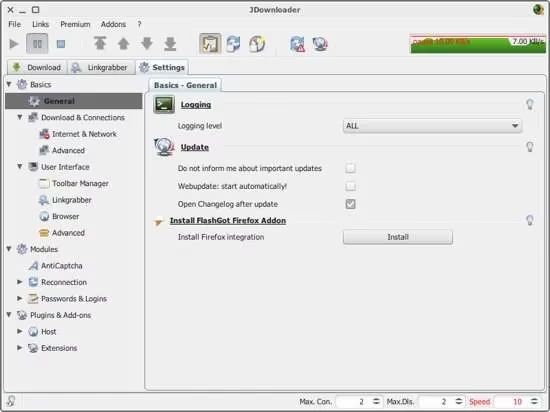
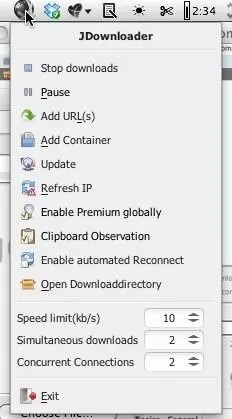
Curious now, Alex explored the Settings tab. Under a cleanly organised pane, she found controls for proxy settings, the maximum number of simultaneous downloads, a dedicated folder for saved files, and even a speed limiter to prevent jDownloader from hogging the entire connection. For someone who often worked from a co‑working space with shared bandwidth, this was a small but crucial touch. She also discovered the menu bar icon on macOS, a tiny but powerful shortcut that let her pause queues or bring the app into focus without rummaging through cluttered desktops.
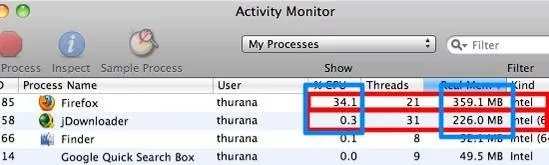
The one concern Alex had nurtured was performance. Java applications, legend had it, were memory hogs. She pulled up her system monitor and let out a short laugh. While jDownloader was undeniably heavier than a minimal command‑line downloader, its CPU footprint was surprisingly gentle, far lighter than the modern browser tabs she constantly juggled. The trade‑off was more than acceptable. Her laptop’s fans stayed quiet even as a small queue of files started to fill her “Papers 2026” folder.
Even in 2026, jDownloader delivers exactly what it originally promised: it flattens the obstacles that file‑sharing sites erect between you and your data. It remains a bit bloated compared to lean, single‑purpose scripts, but the convenience of a unified, copy‑and‑go workflow is hard to beat. The tool has outlived many of the services it was first built to support, quietly adapting to new hosts and new captcha schemes. People have come to rely on it not because it is flashy or modern, but because it simply works. Alex eventually shared jDownloader with her entire research group, and soon it became an unspoken rule: if you needed something from the depths of the web’s file lockers, you let the little Java app handle the nitty‑gritty while you got back to real work. That kind of dependability, sixteen years and countless updates later, is a rare thing.