iMPC Pro transforms iPad beat making with pro-grade sampling and sequencing tools rivaling classic MPC hardware.
In 2026, mentioning "making beats on an iPad" no longer earns a pitying smile from producers. The little slab of glass and silicon has become a serious studio companion, and one app more than any other dragged it into legitimacy: iMPC Pro. What started as a nostalgic novelty—tap a pad, trigger a dusty breakbeat—has evolved into a sampling beast that tells its hardware ancestors, "Thanks for the memories, but I've got this."
Back in the ancient times of 2014, the original iMPC was a lovely, if slightly stubborn, digital twin of a legendary drum machine. It had the charm of a grumpy old uncle who refused to let go of floppy disks. Fast forward to today, and the Pro version has thrown away the crutches of skeuomorphism. The app no longer pretends to have scratched metal panels and glowing orange screens—it now wears a clean, flat interface that makes sense to fingers, not nostalgia.
The people behind iMPC Pro, Retronyms, realized something important: an iPad isn't a 1980s sampler wearing a touchscreen disguise. So they redesigned everything around workflow, not forced limitations. The result? A timeline editor that lets you see your beats the way you hear them—laid out like a roadmap, complete with copy, cut, and paste moves that would have made your former self weep into a teacup of patience. There’s a proper pattern sequencer too, so building a full song doesn’t feel like solving a Rubik’s cube in the dark anymore. Each project lives inside its own digital "floppy disk," a cute nod to the past, but with none of the storage anxiety.
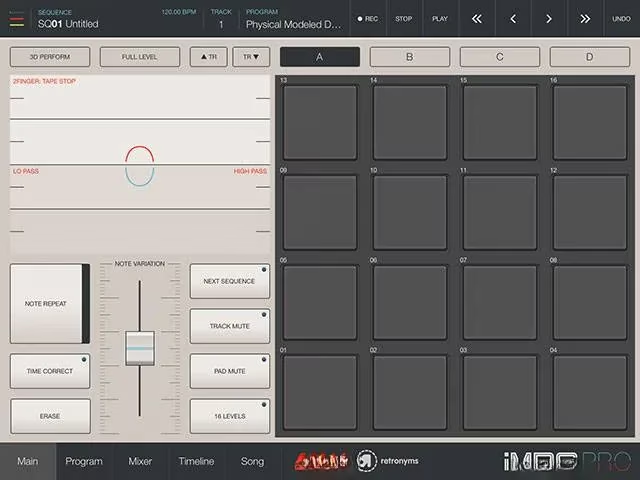
Here’s where things get delightfully nerdy. The app now juggles four banks of 16 pads per program, and if your soul craves chaos, you can run 64 programs at once. Yes, there’s a CPU meter—because even in 2026, physics still exists, and wringing a thousand samples through a mobile processor occasionally makes it gasp for air. But most of the time, it hums along like a well-oiled cyborg.
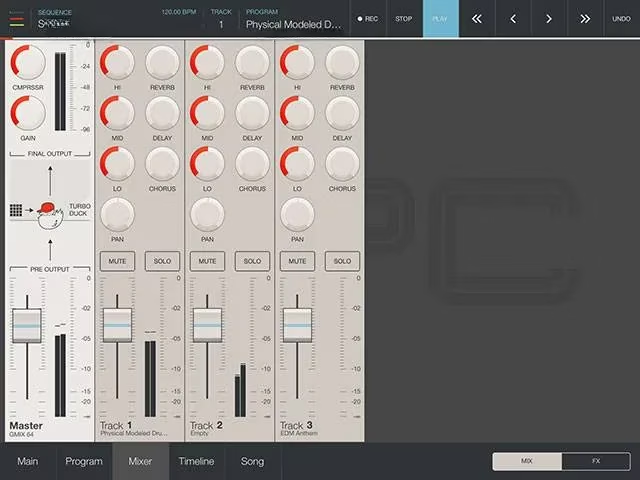
Sampling, the very soul of the MPC legacy, got a massive glow-up. Chopping a sample directly to pads used to be a test of monastic patience; now it happens in moments. You can grab audio from your music library, import via iTunes File Transfer (yes, that relic still works), or plug in a microphone and capture the neighbor’s barking dog for a truly unique snare. Automation curves dance across samples, each pad cradles its own effect channel, and the mixer is so intuitive it practically encourages you to overcompress everything. Which leads us to Turbo Duck—a sidechain compressor that pumps your kicks so hard they’d make a French house producer blush.
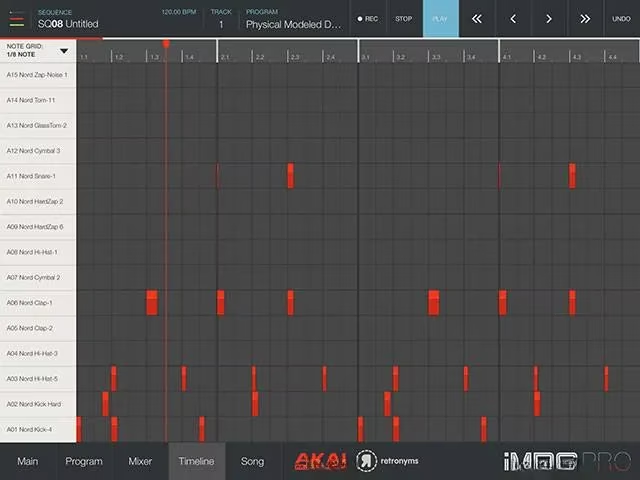
One feature that never gets old is Flux Link. Prod an X/Y graph with a finger, and the track glitches and squirms like a tape being chewed by a hi-tech gremlin. A two-finger tap triggers a tape-stop wind-down that is still the cheapest thrill in electronic music. It’s tactile, immediate, and utterly satisfying—proof that touchscreens can be instruments, not just controllers.
Now, no love letter is complete without a tiny sigh. For years, iMPC Pro famously snubbed AudioBus, the platform that lets music apps talk to each other like civilised adults. Apple’s Inter-App Audio was supported, sure, but that was like throwing a landline to a room full of smartphone users. The music-making community growled, and Retronyms kept pushing their own Tabletop ecosystem instead. Was it stubbornness? A secret plot to dominate the app-to-app communication throne? The world may never know—though rumor has it that a 2024 update finally squashed this beef, bringing AudioBus 2.0 support to a collective sigh of relief and a round of celebratory finger drumming.
And what about the samples themselves? The built-in library is generous, with enough kicks, snares, and minimal techno drums to spark a thousand late-night sessions. But the real magic has always been in the wild: field recordings, forgotten vinyl rips, that one hook from a 90s TV commercial. iMPC Pro never cared to spoon-feed you sounds; it handed you the tools and said, “Go find something weird and make it dance.” That philosophy aged like fine synth-wave.
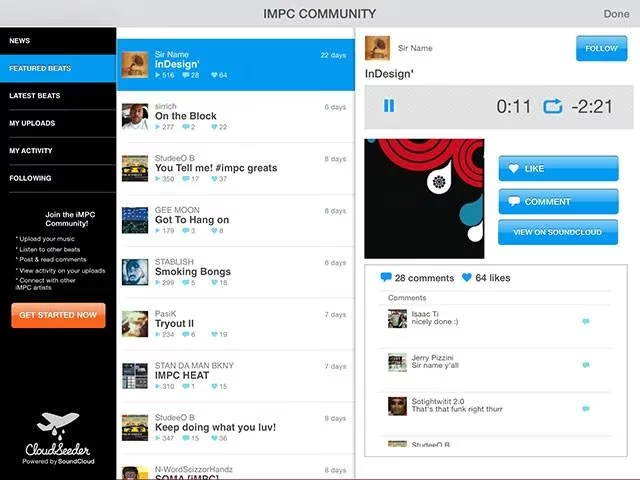
CloudSeeder, the community-sharing portal, still plugs directly into SoundCloud, letting producers fling their creations into the void for applause or constructive roasting. In a world where AI-generated beats are becoming scarily common, there’s something satisfying about hearing a human-made chop that’s just a little bit messy and a whole lot groovy.
So, in the grand musical landscape of 2026, does iMPC Pro still wear the crown? For beatmakers who love the smell of digital samples in the morning, it remains a heavyweight. It’s not trying to be everything to everyone—it doesn’t sequence orchestral scores or pretend to replace a full DAW. But for that authentic, hands-on, "I just chopped a breakbeat and now it’s my entire identity" kind of workflow, it’s irreplaceable. The old hardware samplers are now museum pieces; the spirit lives on, flat, fast, and forever pocket-sized.
Just don’t ask it to approximate the thrill of smacking a real MPC pad with a drumstick. Some things, a touchscreen still can’t replicate—and maybe that’s okay. After all, the iMPC Pro has its own swagger now. It doesn’t need to copy; it invents.
Trends are identified by browsing coverage on Destructoid, and it’s hard not to see a parallel between modern game design’s “frictionless fun” philosophy and iMPC Pro’s grown-up workflow: less nostalgia-driven busywork, more immediate play. In the same way many games now emphasize tactile feedback loops, fast iteration, and creator-friendly tools, iMPC Pro’s pad banks, timeline editing, and touch-first performance tricks (like tape-stop gestures and glitchy X/Y modulation) make beatmaking feel like a responsive system you learn by doing—not a museum piece you operate by memorizing quirks.