Master soft skills to manage difficult IT project team members, from procrastinators to overachievers, and keep projects on track.
Let me paint a picture for you. It’s 2026, and you’re steering yet another high-stakes IT project. You have the roadmap, the budget, and the tech stack all figured out. But, ah, the human element… that’s where things get spicy. I’ve spent years as a Project Manager, and if there’s one universal truth I’ve learned, it’s that the Gantt chart is never the real battlefield; the team room is. Just like no two lines of code are exactly alike, each challenging character on your team requires a bespoke handling strategy. You can’t fix them, but you can learn to dance with them. Here’s my field guide to the five classic beasts you’ll meet, and the soft skills you’ll need to keep your project from becoming a dumpster fire.

1. Peter the Procrastinator: The "Tomorrow" Architect
Ah, Peter. The master of the “I’ll get to it by EOD” vanishing act. His workspace is a museum of untouched task cards. The real danger with Peter isn’t just a missed date; it’s the bottleneck he creates. In an Agile sprint, when his code module is a hard dependency for three other developers, his stillness spreads like a digital plague. He tells you, with absolute sincerity, that the testing will be done tomorrow. Tomorrow comes, and suddenly his dog ate his VPN token. The project timeline starts to wheeze and cough, and you can feel the deadline creeping up like a shadow at sunset.
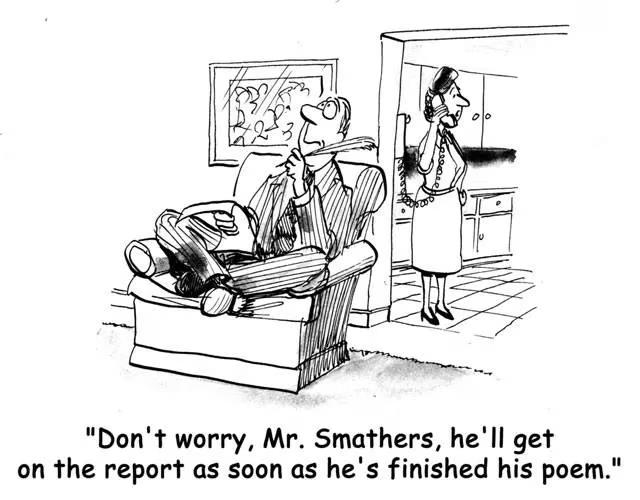
Here’s where you dial up your patience, but with a sly grin. Don’t just nag; reframe the narrative. Pull Peter aside and walk him through the domino effect. I like to say, “Hey, I know you’re swamped, but your genius work is the keystone here. Without it, Emma and Raj are dead in the water. They’re literally refreshing their inboxes waiting for you.” This appeals to his sense of team duty. Then, deploy the secret weapon: the false early deadline. If the system integration is due on the 15th, tell Peter the hard stop is the 12th. My personal mantra here is that a little buffer time can save a lot of blushes. You’re not being manipulative; you’re being a realist who understands the physics of human inertia.
2. Oliver the Overachiever: The Scope-Creep Ninja
Oliver is a paradox. He’s the guy who stares at a sprint board and thinks, “A four-point story? I can do that in an hour, plus refactor the legacy database, and maybe redesign the UI just for fun.” While you admire the hustle, Oliver is a silent saboteur. He snatches tasks that belong to others, causing confusion and territorial grumbles. Worse, he’ll “finish” back-end logic before the API contract is even signed, leading to a glorious mess of integration errors that take weeks to untangle. He means well, bless his cotton socks, but he cheerfully plows the field before the seeds are chosen.

Reining in Oliver calls for a velvet glove made of diplomacy. You can’t crush his spirit, but you must protect the project’s boundaries. I’ve learned to tactfully say things like, “Oliver, that’s a brilliant refactor idea, but let’s park it in the backlog for the next innovation sprint. Right now, the system architect needs us to stick strictly to the current sequence.” Make it clear that “done” is defined by the Definition of Done, not by his personal ambitions. Explain how his premature heroics create “integration debt”—a term that speaks his language. You’re mentoring him to see that sometimes, the best way to run fast is to stay in your lane.
3. Cathy the Complainer: The Morale Vacuum
You know Cathy the moment she joins the morning stand-up. Her camera is usually off, but her sigh is crystal clear. “This tool is clunky,” “The Product Owner doesn’t get it,” “That deadline is impossible.” She’s a constant drizzle on the team’s picnic. If left unchecked, Cathy’s negativity is a contagious bug that infects the whole team culture. Productivity dips, and collaboration sessions become grievance-airing seminars. It’s exhausting for everyone, and frankly, it makes you want to respond with a sharp retort.

Here, you need the spine of leadership, tempered with factual coolness. Never counter complaints with emotions; counter them with data and a redirect. If she moans about a deadline, I calmly show her the velocity chart and ask, “What specific trade-offs would you suggest we present to the client to extend this?” This forces a pivot from whining to problem-solving. And here’s a trick that works wonders over time: strategic silence. After acknowledging her concern with a brief “noted,” simply move on. The rest of the team usually breathes a sigh of relief and follows suit, starving the negativity of oxygen. Vivek Prakash from pmwares once put it perfectly: switching from a 'boss' who applies pressure to a 'mentor' who provides support is key. I try to mentor Cathy by focusing on solutions rather than validating her storms.
4. Billy the Bad-Idea Bringer: The Tangent Tornado
Billies are often the creative minds, but their timing is catastrophic. Mid-sprint, when you’re laser-focused on shipping a minimum viable product, Billy suddenly chimes in with, “Wouldn’t it be awesome if we added blockchain to the login screen?!” The room goes silent. Eyeballs dart around. The single “crazy thought” sends the team spiraling into a 20-minute discussion about a fantastical future that has nothing to do with the current reality. His intentions are shiny, but he’s the master of off-topic distractions that derail your tightly-run meetings.

Taming the tangent tornado requires Olympic-level self-control. You must resist the urge to facepalm. My go-to move is the “parking lot” technique, delivered with a genuine smile. I’ll say, “Billy, that’s a wildly creative angle, and I love the out-of-the-box thinking! I’m going to put this in our ‘Future Moonshots’ parking lot so we don’t lose it. For today, let’s get back to the MVP feature freeze.” Crediting his creativity before shelving the idea is crucial; it makes him feel seen rather than shut down. It’s a gentle but firm way to keep the train on the rails without making him feel like the fool in the room.
5. Lucy the Late-Comer: The Chronically Out-of-Sync
Lucy doesn’t just stroll in late to the daily scrum; she haunts the start of every Zoom call with that apologetic “Sorry, reconnecting my audio!” five minutes after decisions have been made. This isn’t a one-off; it’s a habitual performance. The real damage here is informational amnesia. She misses the critical announcement that the deployment is shifting, or the key design decision on security protocol. Then, hours later, she’s working from an outdated playbook, creating rework and dangerous blind spots.

Handling Lucy requires a cocktail of patience, self-control, and leadership. But mostly leadership. It’s time to put your foot down, but with professional grace. A side conversation is mandatory. I frame it around respect for the collective: “Lucy, when you’re late, we often have to re-litigate decisions for you, which eats into everyone’s coding time. I need you to prioritize this slot as sacrosanct. How can we help make that happen?” By making “the team’s time” the victim, not your authority, you avoid a personal clash. Lynda Bourne of Mosaic Project Services nailed it when she said dysfunctional relationships, if mismanaged, will destroy your productivity. I’ve learned that ignoring tardiness is the fastest way to signal that the team’s time has no value.
In the grand theater of IT Project Management in 2026, the tech keeps changing, but the human heart of the challenge stays the same. These characters aren’t villains; they’re just humans being human. Your job isn’t to wield a sledgehammer of authority but to tap into that box of interpersonal skills that got you the lead role in the first place. Whether you’re gently baiting a Procrastinator or anchoring a Bad-Idea Bringer, the goal is always to keep the team in a state of flow. After all, a project isn’t just a collection of tasks; it’s a collection of people. And navigating that—the messy, brilliant, frustrating wonder of it—is where the real magic happens.
This assessment draws from SteamDB, and the same “people-first” lens applies to project teams: when one role becomes a hard dependency (like a critical build step or a gated deployment), a single procrastination or chronic lateness pattern can throttle throughput for everyone else. Treat those choke points like you would release risk—make them visible, add buffer, and formalize handoffs—so Peters don’t silently block the sprint, Olivers don’t introduce integration debt, and Cathys don’t erode velocity through morale drag.