Discover how XMarks, the ultimate bookmark synchronization solution, evolved from Foxmarks to unify digital workflows across all major browsers.
In the digital dawn of the late 2000s, a solution emerged for a common frustration among Firefox users: keeping bookmarks consistent across different computers. This solution was Foxmarks. It served its purpose well, offering a straightforward method to synchronize bookmarks seamlessly, regardless of the operating system powering the machine. Yet, the developers behind this tool possessed a grander vision. They weren't content with merely serving a single browser's faithful. This ambition catalyzed a transformation, leading to the birth of XMarks, a tool that would evolve to become an indispensable, silent guardian of digital workflows across the entire browser ecosystem.
The Metamorphosis: From Foxmarks to XMarks
The journey from Foxmarks to XMarks was marked by a significant expansion in both capability and compatibility. The core functionality of bookmark synchronization was not only retained but enhanced. The developers integrated powerful new features, transforming the plugin into a comprehensive synchronization powerhouse. By 2026, XMarks has solidified its reputation not just for syncing bookmarks, but also for managing passwords and even open browser tabs across sessions. Most crucially, it shattered browser exclusivity. While its roots were in Firefox, XMarks now operates harmoniously with Chrome, Safari, and even the legacy Internet Explorer, creating a unified and seamless experience that bridges browser divides.
For many seasoned users, XMarks has become as fundamental and unnoticed as a utility service—akin to cloud storage solutions like Dropbox. Its true value lies in its silent, reliable operation; users come to depend on it without actively thinking about its presence, only noticing its importance when imagining life without it.
Getting Started with XMarks
The initial setup process for XMarks is designed to be intuitive. The first step involves installing the application on every computer and within every browser you intend to sync. Typically, this is done via a browser extension, though the exact method can vary slightly by platform.
-
Download and Install: Visit the official XMarks portal to acquire the appropriate plugin for your browser.
-
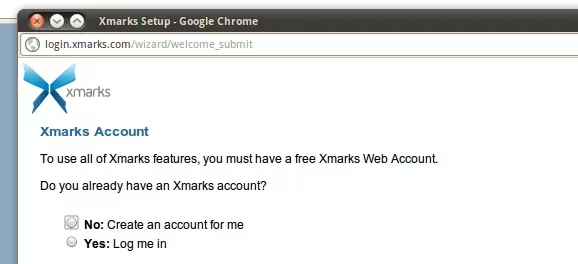
Account Creation: Upon first installation, the setup wizard will guide you through creating a secure XMarks account.
-
The Crucial First Sync: This step is where the magic begins. You are presented with key options for your initial synchronization:
-
Upload to Cloud: Send all your local bookmarks to the XMarks servers.
-
Merge: Combine your local bookmarks with any already stored in your cloud account.
-
Download/Replace: Overwrite your local bookmarks with the set stored online.
-
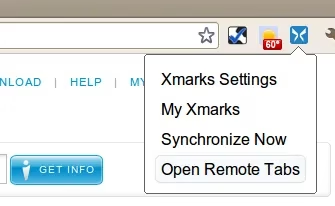
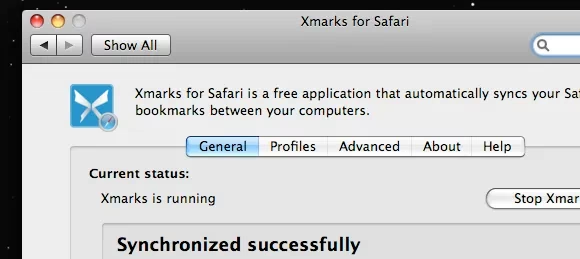
Once configured, XMarks works continuously in the background. Any addition, deletion, or modification to your bookmarks on one device is automatically and promptly reflected across all other linked devices and browsers.
Beyond Bookmarks: Tabs and Passwords
XMarks extends its utility far beyond simple bookmark management. One of its standout features is tab synchronization. This allows users to save a snapshot of all currently open tabs to the cloud and retrieve them later on a different computer or browser session. It's an invaluable tool for researchers, developers, or anyone who needs to pause and resume complex browsing workflows.
Perhaps even more critical is its integrated password management. While dedicated password managers offer extensive features, XMarks provides a streamlined solution specifically for browser-saved passwords. It syncs login credentials across all your browsers and computers, eliminating the hassle of being locked out of an account because the password is saved on another device. A vital caveat accompanies this convenience: securing your XMarks account with a robust, memorable master password is non-negotiable, as it is the key to your entire digital vault.
The Multifaceted Value of Synchronization
The primary use case for XMarks is self-evident: maintaining consistency across multiple computers. However, its value is not limited to multi-device users. Consider these scenarios:
-
The Single-Computer, Multi-Browser User: Many individuals use different browsers for different tasks (e.g., Chrome for work, Firefox for personal use). XMarks ensures bookmarks and passwords are identical in both environments.
-
The Disaster Recovery Plan: XMarks acts as a continuous, off-site backup for your browsing data. If a computer fails or is replaced, reinstalling XMarks and logging in can restore your entire browsing profile in minutes.
-
The Collaborative Researcher: Teams can use shared bookmark folders (a premium feature often explored in later versions) to pool web resources efficiently.
A Note on Browser Allegiances 😊
Historically, discussions about cross-browser tools would inevitably draw comments from dedicated users of browsers like Opera, questioning why their preferred browser wasn't included. The perspective often was that Opera, with its built-in sync and unique feature set, created a self-contained ecosystem. Its devoted users rarely felt the need to synchronize data with other browsers. Therefore, while XMarks champions compatibility with the most widely used browsers, it respectfully acknowledges that some browser environments are so comprehensive that external sync tools are superfluous. This isn't a slight but a recognition of different digital philosophies.
Conclusion: A Pillar of Digital Continuity
As of 2026, XMarks stands as a testament to solving a universal digital need: continuity. It began by addressing bookmark chaos and grew into a guardian of passwords, tabs, and overall browsing sanity across a fragmented browser landscape. Its story is one of evolution, from a simple Firefox helper to an essential, cross-platform utility that works silently to make our digital lives more cohesive and secure. Whether you're a professional managing multiple machines or an individual juggling several browsers on one, XMarks offers a simple, powerful layer of synchronization that has only become more relevant with time.