The Pomodoro Technique transforms focus with timed intervals, and free Pomodoro apps like Pomatez and Tomato Timer help maintain that rhythm.
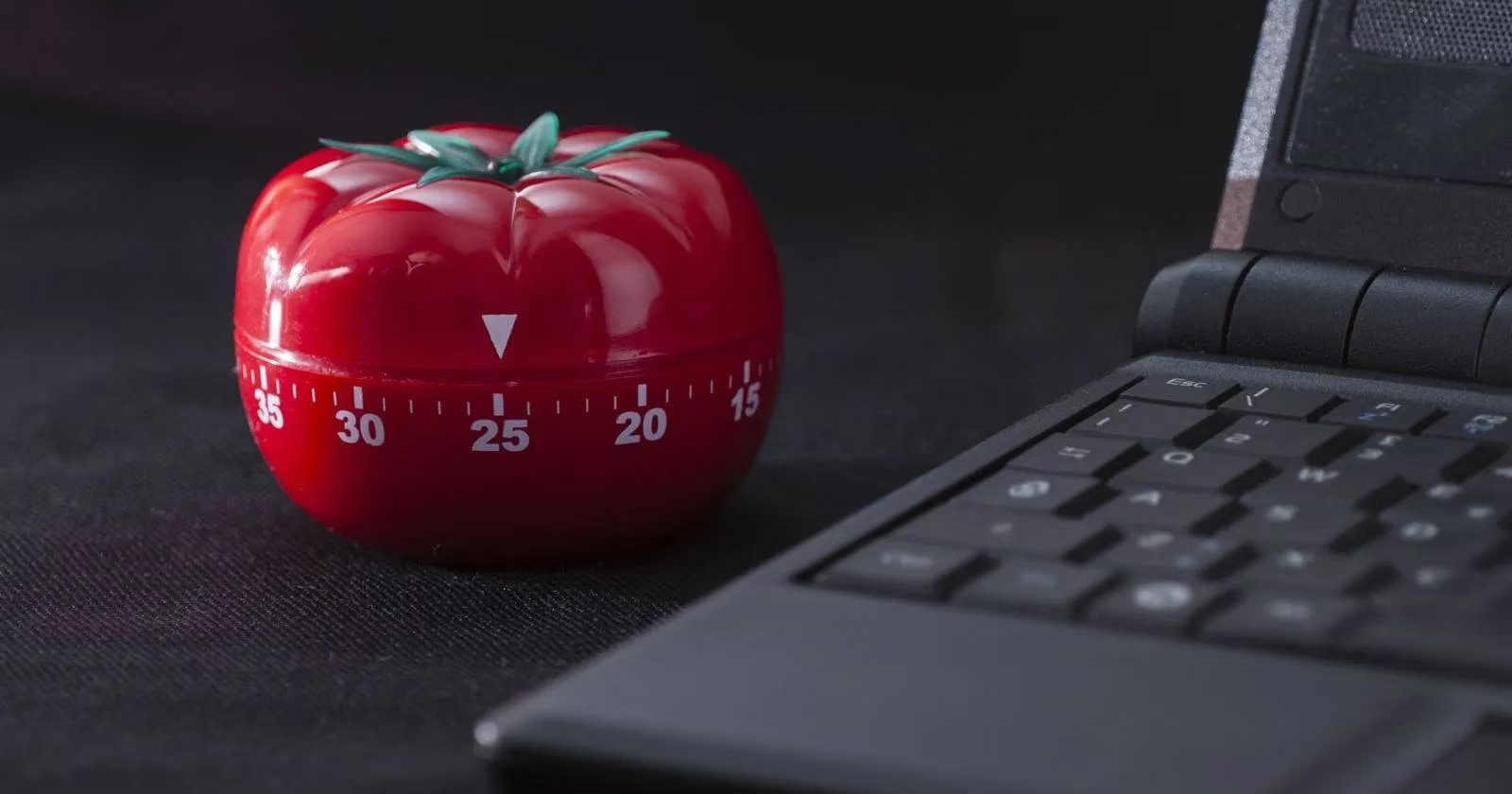
In the frantic digital landscape of 2026, Emma’s attention felt like a skittish hummingbird, darting from one notification nectar to another. Her freelance writing deadlines loomed like storm clouds, yet her focus evaporated at the slightest ping. Desperate for a lifeline, she stumbled upon the Pomodoro Technique—a method as simple as it was transformative. The technique, born from Francesco Cirillo’s tomato-shaped kitchen timer decades ago, proposed a rhythm as ancient as a blacksmith’s hammer: 25 minutes of unbroken work followed by a short rest. Each work block was called a Pomodoro—a tiny fortress of concentration. After four such fortresses, a longer respite allowed the mind to breathe. To Emma, this structure felt like a compass in a fog of distractions.
The Heartbeat of the Technique
The core of the method was deceptively straightforward. One began by assembling a task list—a to‑do list as simple as a sheet of paper from Cirillo’s downloadable template. Every task was tackled in 25‑minute increments, called Pomodoros, separated by 3‑ to 5‑minute breaks. After completing four consecutive Pomodoros, a longer break of 15 to 30 minutes refreshed the mind. Emma discovered that estimating how many Pomodoros each task required demanded practice; at first it was like guessing the weight of a cloud. Yet as she persisted, her sense of time sharpened. The ticking timer became a metronome for her brainwaves, synchronizing her thoughts into a coherent symphony instead of the usual cacophony of half‑formed ideas.
The Search for the Perfect Digital Companion
Armed with the principles, Emma needed a free app that could be more than a stopwatch. She wanted a quiet partner—a digital garden gnome tending to her work rhythm. She tried three standout free tools, each offering a distinct flavor of the Pomodoro experience.
Pomatez: The Task‑Taming Conductor
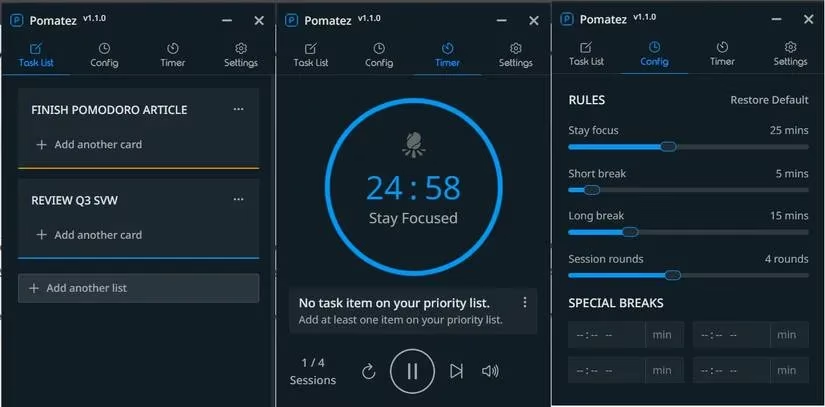
The first app she embraced was Pomatez, which wrapped all essential Pomodoro elements into one tidy package. It felt like a benevolent librarian who not only catalogued her to‑dos but also prioritized them. Built as open‑source software for Windows, macOS, and Linux, it required no login—a breath of fresh air in an era of endless accounts. Emma loved the full‑screen break reminders, which acted like a firm but kind mentor pulling her away from the screen. A strict mode enforced the workflow, and she could customize every length—Pomodoros, short breaks, long breaks, even special breaks for lunch. The auto‑updating UI stayed sleek and unobtrusive, making Pomatez the conductor of her daily focus orchestra.
Tomato Timer: The Bare‑Bones Timekeeper
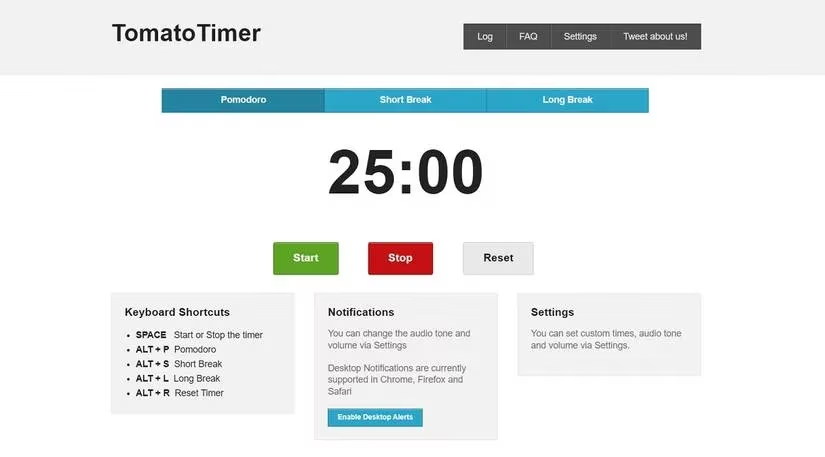
When Emma worked on a borrowed machine where installing software was impractical, she turned to Tomato Timer. This free web app was a spartan butler, simply counting down the minutes without frills. It held no task list, no log—only a trio of timers for Pomodoros, short breaks, and long breaks. She combined it with a basic Google Tasks list and a spreadsheet; the combination was like a sailboat without an engine, relying on the wind of her own discipline. Yet its reliability was unshakeable. Customizable sounds and automatic start options, plus handy keyboard shortcuts, let her navigate with minimal mouse movement. Desktop notifications required a modern browser like Chrome or Safari, which she had. Tomato Timer was the digital equivalent of a trusty hourglass: minimal but effective.
Pomofocus: The Insightful Strategist
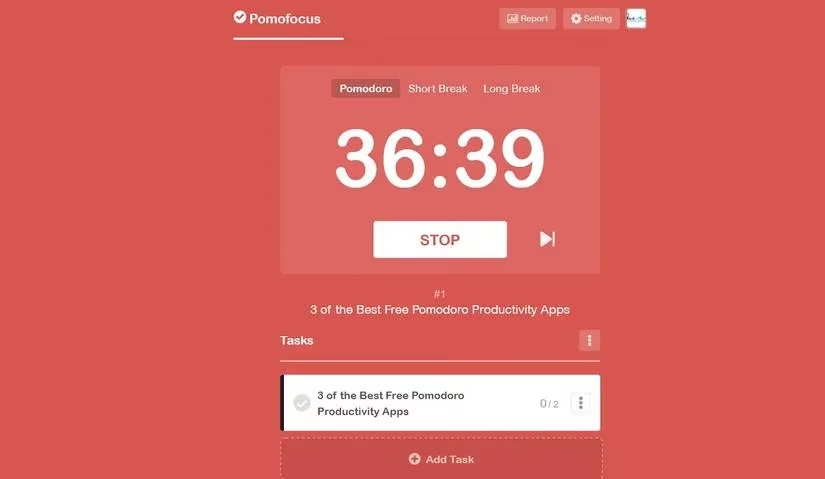
For deeper self‑reflection, Emma explored Pomofocus, a web app that combined modern aesthetics with analytics. It was like a personal observatory where she could track her focus hours daily, weekly, and yearly. Creating an account unlocked the ability to estimate Pomodoros per task and offered a Reports tab—a dashboard of her attentional fitness. She could auto‑start breaks and Pomodoros independently, a nuance that made the rhythm feel organic. A weekly ranking of top users injected a gentle competitive spirit, like a friendly race among colleagues. While the free version lacked yearly reports and dark mode, for Emma it was enough. Pomofocus turned her work data into a mirror, reflecting not just hours but the quality of her mental stamina.
The Transformation
Within weeks, Emma’s hummingbird mind had been trained to perch. The three apps, each with its own personality, served as different lenses on the same technique. Pomatez gave structure, Tomato Timer insisted on simplicity, and Pomofocus revealed patterns. The Pomodoro Technique, once a mere concept, became her daily scaffolding. She learned to leverage those 25‑minute fortresses to build a portfolio of completed projects, and the breaks turned into small celebrations. In 2026, with distractions multiplying like digital spores, these free tools remained steadfast allies—proving that sometimes the most powerful productivity hacks are also the most timeless.